


News
30th April 2026
In March, organisations from across the region came together to raise funds for and catalyse conversation about one of the city’s most pressing challenges, and greatest opportunities: digital inclusion. We were pleased to sponsor Dynamo North East’s annual Tech Charity Dinner on Thursday 19th March as a Social Impact Partner, alongside hosting a Digital Inclusion roundtable at City Hall ahead of the dinner.
Dynamo North East is a not‑for‑profit, industry‑led membership organisation dedicated to strengthening the North East’s tech sector. We were proud to sponsor this event as part of our commitment to fighting digital exclusion, and to stand alongside partners who are equally determined to close the digital divide. The dinner offered a great opportunity to meet organisations that share this purpose, and to explore how we can work together in even more ambitious ways. We were especially pleased to see this regional event take place here in Sunderland – a city where people, partnership and possibility are already shaping a citywide digital inclusion agenda. With an estimated one in four people in Sunderland experiencing or at risk of digital inclusion, the council’s ambition to build a connected, international city with opportunities for all relies on more than physical infrastructure and connectivity. Technology must enable opportunity, giving people the chance to go online when and how they want to – and ensuring that no one and nowhere is left behind.
Dr David Dunn, CEO of Dynamo North East said:
“Sunderland City Council brings clarity, ambition and deep local insight to the digital inclusion agenda. As a Social Impact Partner, they play a crucial role in ensuring the region’s tech growth is inclusive, sustainable and rooted in community benefit.”
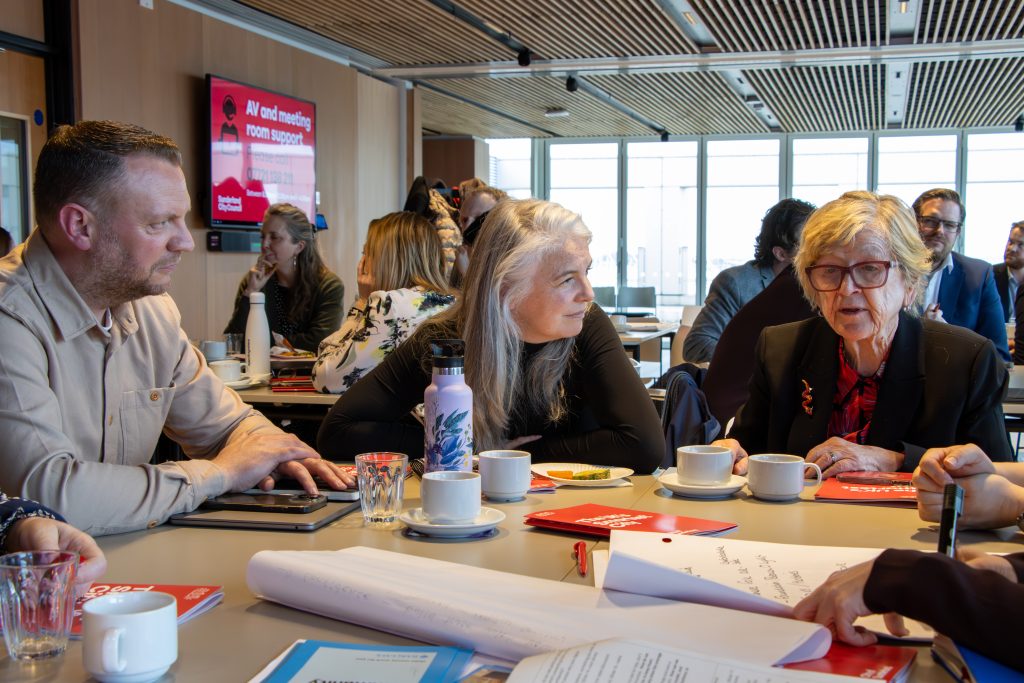
The roundtable welcomed almost 30 attendees from local government, education, health, industry, and the voluntary sector. Senior leaders from Sunderland City Council joined representatives from organisations including the Good Things Foundation, Barclays, BornGood CIC, Recite Me, Phonetic Digital, Gentoo, Virgin Money Foundation, Sunderland College, and the Beacon of Light.
The afternoon began with a guided tour of the Riverside Sunderland development, showcasing how the city is integrating smart technology and place-based investment. This set the tone for the discussions that followed: digital inclusion is about community and collaboration, not just devices or systems.
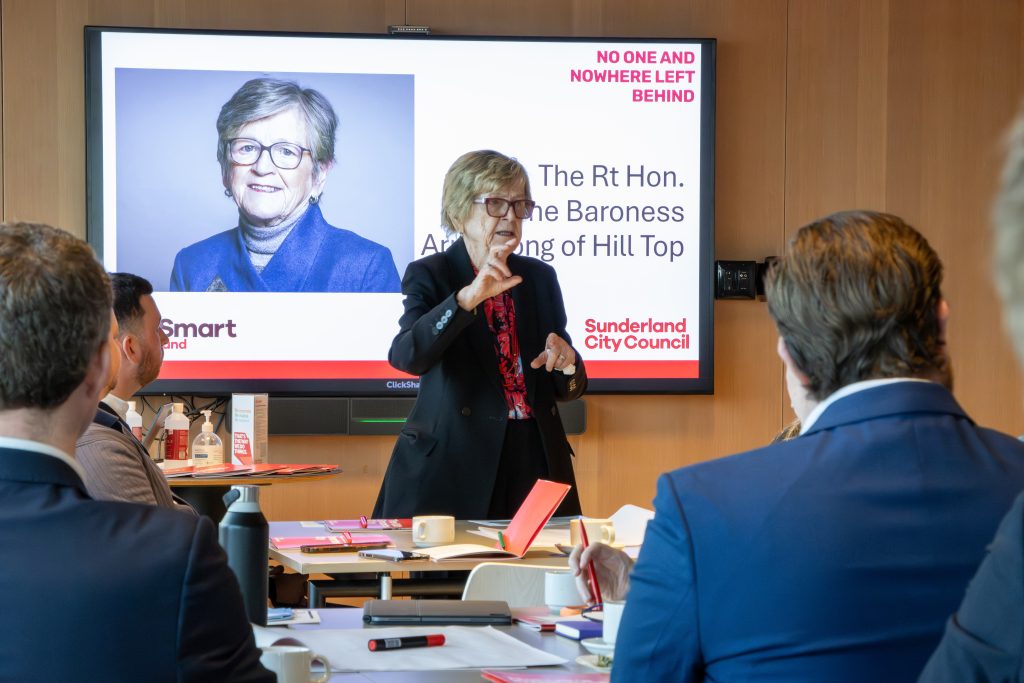
Sunderland City Council’s Chief Executive Patrick Melia opened the roundtable session, reinforcing the council’s commitment to ensuring residents are not left behind as the city grows. We were honoured to welcome Baroness Hilary Armstrong, whose insight and long-standing commitment to tackling inequality brought depth to the conversation, and helped ground our local efforts in the wider national picture. Her reflections emphasised that digital exclusion is rarely a standalone problem: it is intertwined with affordability, health, confidence, skills, and the design of public services.
The session then explored three different themes, with discussions facilitated by Isobel Thomas of the Good Things Foundation. Firstly, with Simon Howatson (BornGood CIC), the roundtable examined access: who has devices, who does not, and what this means. The second theme of digital confidence and skills brought insights from Billy Carrick of Barclays, who highlighted the human challenges behind digital skill building. For many residents, fear of making mistakes, or being scammed, is a major barrier to going online. Contributors agreed that trusted, one-to-one support is essential, but resource intensive. The final theme explored Accessibility, led by Steven Parker from Phonetic Digital and Will Batchellor from Recite Me. Improving accessibility is not simply a technical exercise; it requires cultural change. The roundtable discussed how frontline staff, designers and communications teams can embed accessibility as an essential element, not a ‘nice to have’.
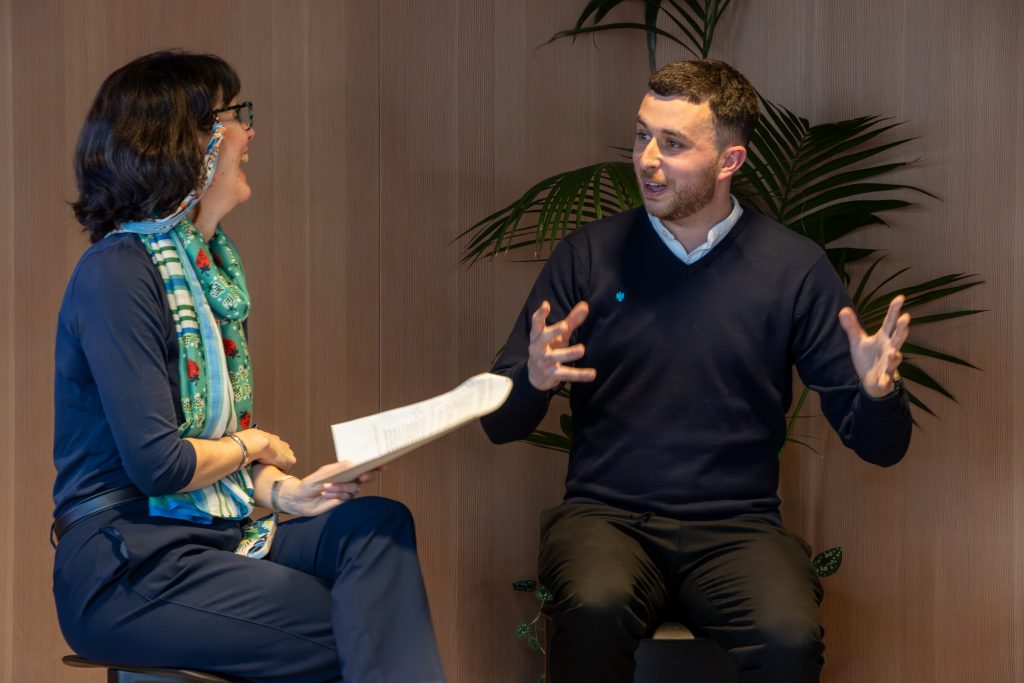
The roundtable ended with a ‘Curiosity Wall’, displaying practical actions that organisations could take – from hosting Techy Tea Parties and donating refurbished devices, to funding SIM cards, supporting web accessibility audits, or contributing staff time to community training. Attendees were invited to write their name beside ideas they were interested in exploring, creating a starting point for future conversations and commitments.
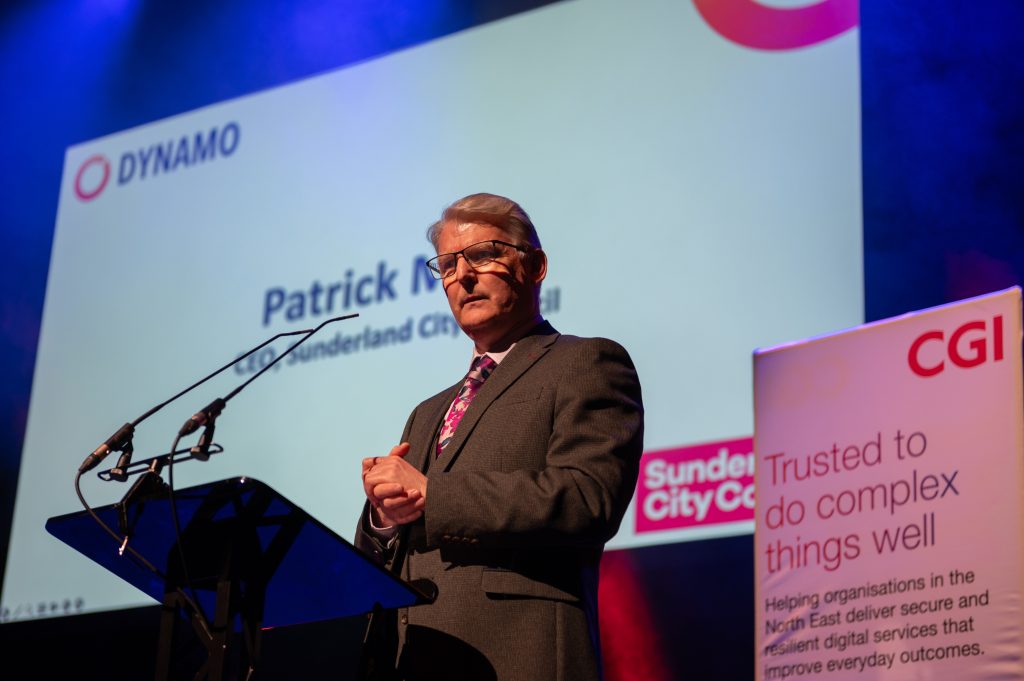
In the evening, many attendees joined Dynamo’s Tech Charity Dinner at the Fire Station. As a Social Impact Partner, Sunderland City Council helped champion the importance of digital inclusion across the region. Patrick Melia gave an address to attendees, which highlighted how Sunderland is leading the way with Digital Inclusion, and not shying away from it. Dynamo’s Digital Inclusion Fund (delivered with the Community Foundation) continues to raise and distribute funds to local organisations tackling the digital divide. In just two years, the funding raised and distributed to overcome digital exclusion will be more than £100k.
Sunderland has already made significant strides in shifting the dial on digital inclusion, and that progress is only possible because of people and partnerships. Community investment, cross‑sector collaboration, and a shared commitment to ensuring technology serves people is driving regional change. Thank you to Dynamo for welcoming us as a Social Impact partner, and to all those partners involved in both the dinner and the roundtable.
To learn more about our digital inclusion programme, visit Go Online Sunderland. Plus, find out more about Dynamo North East.